Biography
Jean-François Millet was born in 1814 into a peasant family in Gruchy, a coastal village in Normandy, and worked the fields as a youth. He studied painting in Cherbourg and won a stipend to go to Paris, where he entered the studio of Paul Delaroche. In his early years he earned his living with portraits and small pictures in a Rococo vein.
In 1849, escaping cholera and unrest in Paris, he moved with his family to Barbizon, at the edge of the Forest of Fontainebleau. There, in the company of Théodore Rousseau and others, he devoted himself to the labor and life of peasants. The Sower, The Gleaners and The Angelus present rural toil and dignity in grave, simple forms; controversial at the time for their supposed political overtones, they later became among the most beloved paintings in France.
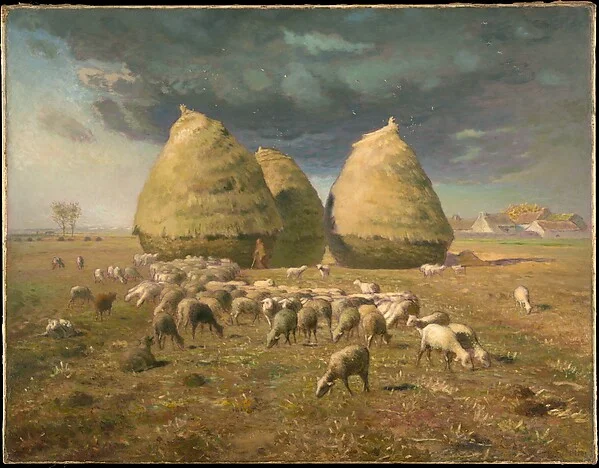
In his later years Millet made many pastels and landscapes. Haystacks: Autumn belongs to a late series of the four seasons: golden haystacks cast shadows across a broad field where sheep graze beneath a churning sky, a scene of calm and power. Millet died in Barbizon in 1875, and his treatment of peasant subjects profoundly influenced later painters, among them Vincent van Gogh.