Biography
Paul Cézanne was born in 1839 in Aix-en-Provence, in the south of France, the son of a banker. A boyhood friend of the writer Émile Zola, he went to Paris to study painting against his father's wishes and was repeatedly rejected by the official Salon. In the 1870s, encouraged by Camille Pissarro, he took up painting outdoors and exhibited at the Impressionist shows of 1874 and 1877.
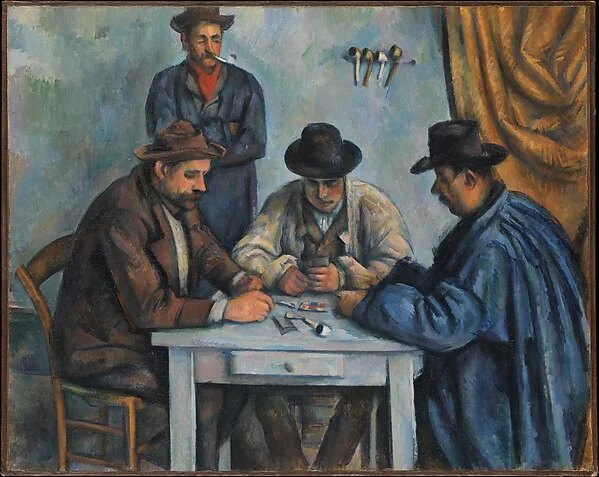
Thereafter Cézanne spent most of his time in Provence pursuing his own path. Dissatisfied with Impressionism's capture of fleeting light, he sought a solid, enduring structure, building form and space from directional strokes of color, and returned again and again to Mont Sainte-Victoire, still lifes, peasant card players and bathers. Still Life with Apples and a Pot of Primroses and The Card Players show this rigorous construction, and his many portraits of his wife, Hortense Fiquet, such as Madame Cézanne in the Conservatory and Madame Cézanne in a Red Dress, present her as still and composed as a still life.
In 1895 the dealer Ambroise Vollard gave him a solo exhibition, and a younger generation of painters began to study his work. Cézanne died in Aix in 1906. His explorations of form and structure directly inspired Cubism, and he is often called the father of modern art.